



Beneath the Burren
A Landscape Shaped by Pressure, Time and Change
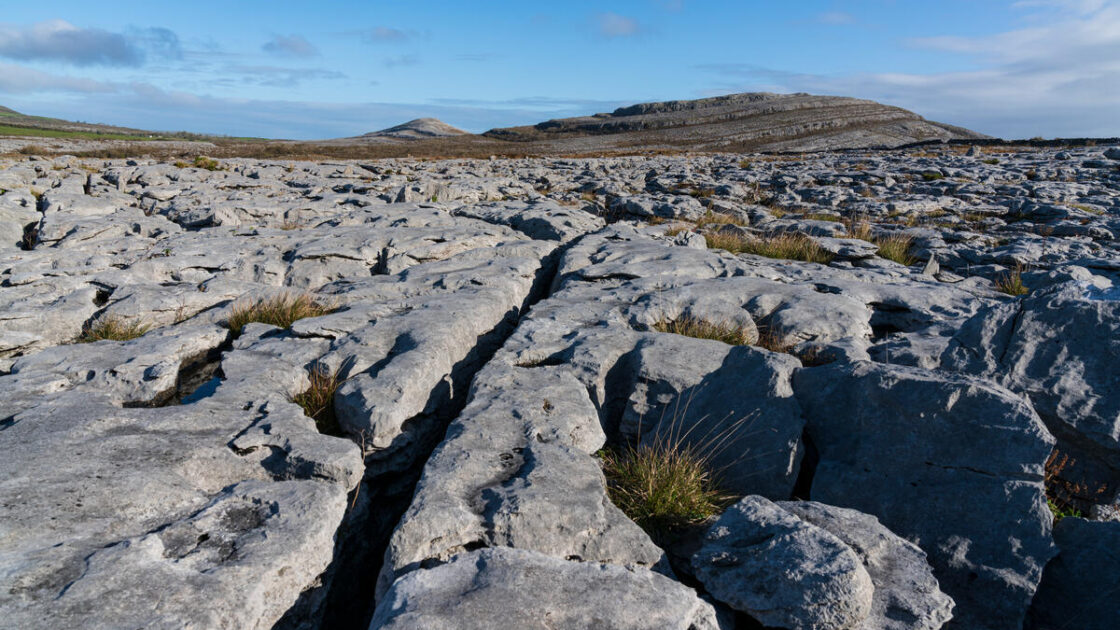
The Burren’s exposed limestone pavements, cliffs and valleys are among Ireland’s most distinctive landscapes, but what we see at the surface represents only a small part of a much deeper story. Formed in warm tropical seas over 330 million years ago, the rocks of the Burren have since been buried, fractured, heated, eroded and reshaped by powerful geological processes. By reading the rocks carefully, geologists can reconstruct ancient environments, distant tectonic events and even clues about future change.
Limestone Under Pressure: Stylolites
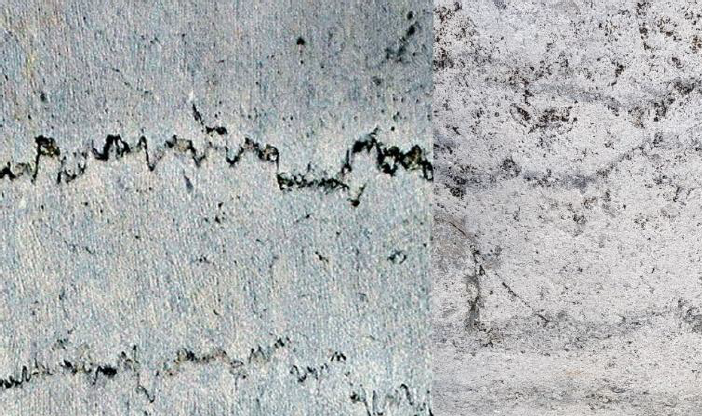
After the limestone of the Burren formed on the seabed, it was buried beneath several kilometres of younger rock, increasing both temperature and pressure. Under these conditions, the calcite crystals that make up limestone began to dissolve where they were pressed together most tightly. This process created irregular seams called stylolites, which appear as jagged or wavy lines within the rock. Stylolites mark zones where limestone has effectively been removed and later became lines of weakness that water could exploit, helping to guide the development of caves, fissures and other karst features we see today.
What Lies Beneath the Burren
Although limestone dominates the Burren landscape, it is only the uppermost layer of a much thicker crust. Seismic studies reveal that the Earth’s crust beneath the Burren is about 33 km thick, below which lies the hotter, partially molten mantle. Other geophysical surveys suggest that the Galway Granite, formed hundreds of millions of years ago, may extend beneath much of the Burren at relatively shallow depths. These findings highlight how closely the surface landscape is linked to deep Earth processes.

Fractures, Veins and Tectonic Movement
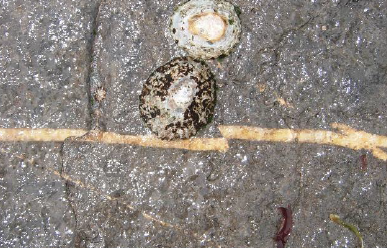
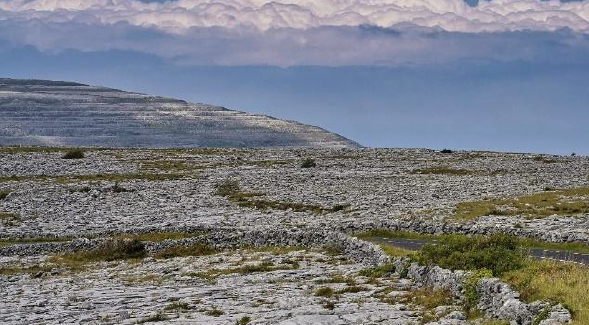
The distinctive grid pattern of limestone pavements in the Burren is controlled by fractures created during ancient tectonic stresses. Many of these fractures formed around 300 million years ago when continental plates collided, cracking the limestone and allowing hot mineral-rich fluids to circulate. As these fluids cooled, they deposited calcite, sealing the fractures as veins. Recent dating of these veins shows that they were reopened and resealed multiple times, recording tectonic events associated with the opening of oceans and the formation of mountain belts such as the Pyrenees and the Alps.
Fossils Large and Small
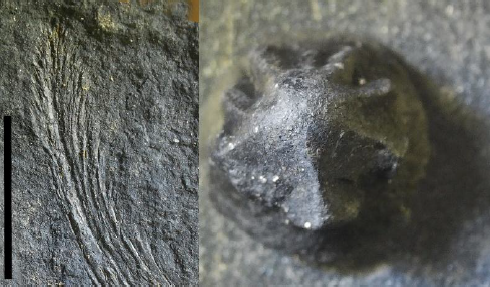
The Burren’s limestone preserves a rich fossil record from a time when the region lay beneath warm shallow seas. While complete fossil sharks are rare due to their cartilaginous skeletons, their teeth and dermal denticles are commonly preserved. Tiny fossils such as conodont elements — microscopic tooth-like structures from extinct eel-like animals — are especially valuable to geologists. Recent student-led research has identified new occurrences of conodonts in the Burren, providing important information about the age of rock layers and ancient marine conditions.
Ash from Distant Volcanoes
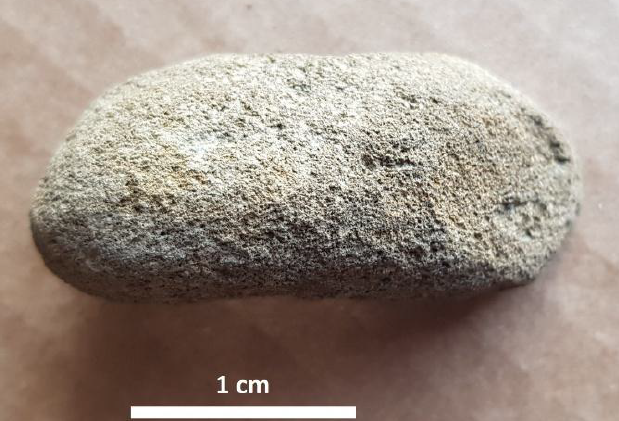
Explosive volcanic eruptions can send fine ash particles high into the atmosphere, where they may travel thousands of kilometres before settling. Although Ireland has no active volcanoes, ash from Icelandic eruptions has reached the Burren on several occasions over the past 7,000 years. These thin deposits are rarely visible today but can be preserved in lakes, bogs and cave sediments. When intact, they allow geologists to link local environmental records to specific volcanic eruptions far away.
Powerful Seas and Moving Boulders
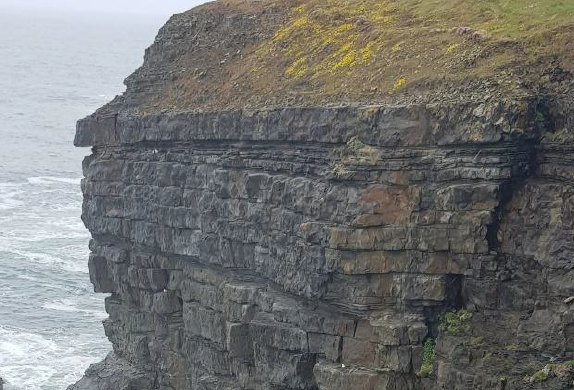
Along the Burren’s Atlantic coast, extreme storms have the power to reshape the landscape dramatically. Large limestone blocks, some weighing up to 100 tonnes, have been lifted and transported across cliff-top platforms by storm waves. Once thought to be evidence of tsunamis alone, detailed research and wave-tank experiments now show that storms are capable of moving these enormous boulders. This process continues today and may become more frequent or intense as climate patterns change.
Atmosphere, Deep Time and Climate Change
The Burren’s rocks were formed during a time when Earth’s atmosphere and climate were very different from today. Over tens of millions of years, natural changes in oxygen and carbon dioxide levels influenced global temperatures and ice ages. In contrast, modern human activity has caused a rapid rise in carbon dioxide within just a few decades. Seen against the vast timescales recorded in the Burren’s geology, the speed of current atmospheric change is unprecedented and deeply significant.
The Burren is a landscape shaped by immense pressures, deep time and ongoing natural forces. From stylolites hidden within limestone to storms actively reshaping the coast, the region continues to evolve. By understanding what lies beneath the surface and how the past connects to the present, we gain a deeper appreciation of the Burren, not only as a place of beauty, but as a record of Earth’s long and dynamic history.
Author Credit: Dr. Eamon Doyle (Geologist, Burren and Cliffs of Moher UNESCO Global Geopark)
Explore The Burren
Experience the magic of the nearby and captivating Burren and Cliffs of Moher UNESCO Global Geopark.
EXPLORE MORE
Book Your Stay
Lady Gregory Hotel serves as the perfect starting point to relish the charm of the nearby Burren & Cliffs of Moher Geopark.
BOOK NOW